How to Choose a Web App Development Company in 2026
How to Choose a Web App Development Company in 2026

A web app development company is a professional service provider that designs, builds, and maintains custom web applications tailored to specific business goals. These firms translate your product idea into working software by combining technical execution, UX/UI design, and project management under one roof. For startup founders launching an MVP or business owners replacing a legacy system, choosing the right development partner is one of the highest-stakes decisions you will make. The wrong choice costs time, money, and market position. The right one gets you to launch with a product that actually works.
What services does a web app development company offer?
The service range of a professional web app development agency goes well beyond writing code. The best providers cover the full product lifecycle, from early discovery through to post-launch support. Full-service coverage typically includes front-end and back-end development, custom dashboards, SaaS platforms, and ongoing maintenance.
Here is what you should expect from a capable provider:
- Product strategy and discovery: Defining what to build before any code is written. This includes requirements gathering, user research, and feature prioritization.
- UX/UI design: Wireframes, prototypes, and interface design that make the product usable and conversion-ready.
- Full-stack development: Front-end (what users see) and back-end (the logic, database, and server layer) built together.
- API integration: Connecting your app to third-party tools like payment processors, CRMs, or data providers. API-driven development speeds up builds while improving business workflows.
- Quality assurance and testing: Catching bugs before your users do.
- Ongoing maintenance and security updates: Post-launch support that keeps the product stable and trusted.
Dedicated teams using agile methodologies deliver faster, more responsive development than waterfall approaches. Agile means you see working software in short cycles, not after six months of silence.
Pro Tip: Ask any agency you shortlist whether they assign a dedicated project manager or whether developers manage client communication directly. The answer tells you a lot about how the engagement will actually run.

How much does hiring a web app development company cost?
Cost is the question every founder asks first, and the honest answer is: it depends on complexity. Custom web application development scales across three broad tiers based on scope and features.
| Complexity tier | Typical cost range | What it covers |
|---|---|---|
| Basic tools and MVPs | $8,000–$30,000 | Simple CRUD apps, internal tools, early-stage MVPs |
| Mid-level platforms | $30,000–$150,000 | SaaS products, multi-role dashboards, workflow automation |
| Complex enterprise systems | $150,000–$600,000+ | Large-scale platforms, custom integrations, high-security environments |
Three pricing models dominate the market. Fixed-price contracts give you cost certainty but require a well-defined scope upfront. Hourly or time-and-materials billing gives you flexibility but makes budgeting harder. Retainer agreements work well for ongoing development and maintenance after launch.
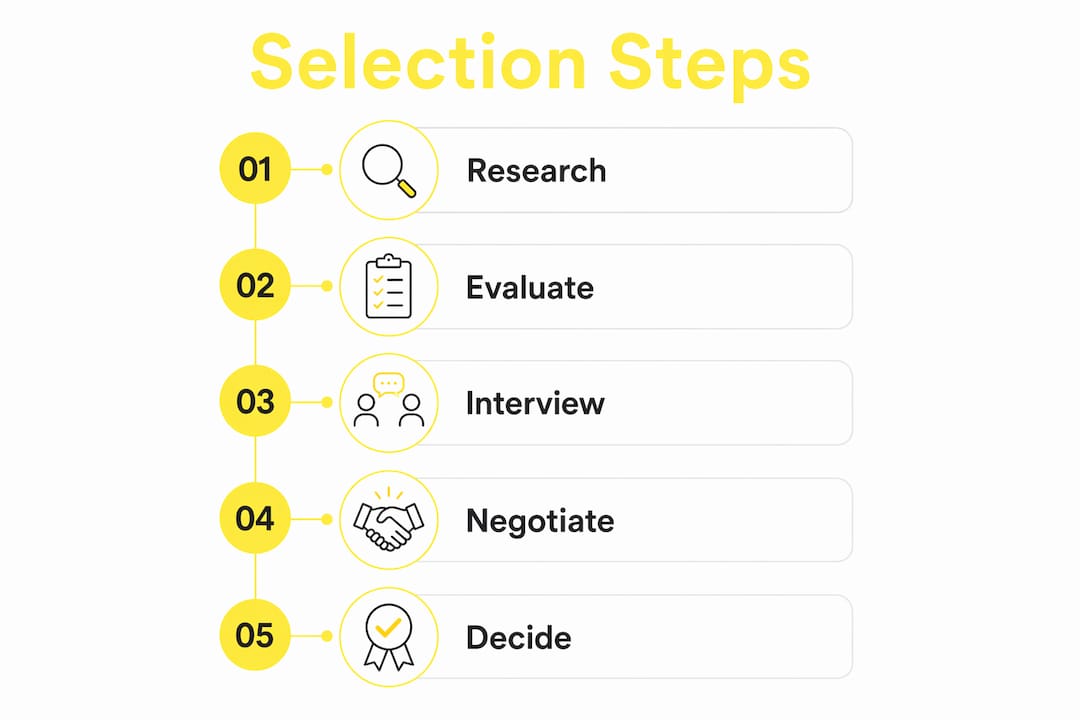
Timeline and cost move together. MVPs typically take 8 weeks to build in browser-based form, while complex systems can run 6–12 months. Knowing your timeline before you sign a contract helps you plan your marketing and funding milestones around the build.
For a detailed breakdown of what drives SaaS costs specifically, the SaaS development cost guide at Wallandfifth covers the key variables clearly.
Pro Tip: Never accept a quote without a written scope document. Scope creep is the single biggest reason web app projects run over budget. A fixed-price contract without a defined scope is not actually fixed.
What separates a top-tier web app development company from the rest?
The technical skill gap between agencies has narrowed. What separates the best providers is not whether they can write code. It is how they manage the project, communicate with you, and protect your interests.
Approximately 90% of clients of top-rated development companies cite high-quality project management and clear communication as the primary drivers of satisfaction. That statistic matters because most founders assume technical quality is the main differentiator. It is not. A technically capable team that communicates poorly will still deliver a late, over-budget product.
The traits that define a genuinely strong provider include:
- Delivery track record: Can they show you real products they have shipped, not just mockups?
- Modern tech stack: React, Node.js, PostgreSQL, and cloud infrastructure like AWS or Google Cloud are current standards. Agencies still building on outdated stacks create technical debt from day one.
- IP ownership: Full client ownership of code and data is best practice. Never sign a contract that leaves IP ownership ambiguous.
- Startup experience: Agencies that have built MVPs understand constraints. They know when to build lean and when to build for scale.
- Post-launch support: Ongoing maintenance and security updates are not optional extras. They are part of the total cost of owning a web product.
The best web app developers treat your business outcome as the goal, not the delivery of a feature list.
How does the web app development process work from start to launch?
A well-run development engagement follows a clear sequence. Deviations from this sequence are usually where projects go wrong.
- Discovery and requirements: The agency works with you to define the problem, the users, the core features, and the technical constraints. This phase produces a scope document and a project plan.
- Product design: UX/UI designers create wireframes and prototypes. You review and approve before development starts. Changes at this stage cost hours. Changes after development starts cost weeks.
- Development sprints: Developers build in short cycles, typically one to two weeks. You review working software at the end of each sprint. This is where agile methodology pays off.
- API and third-party integration: Payment gateways, authentication systems, analytics tools, and external data sources get connected. Specialist knowledge matters here because integration failures are a common source of delays.
- Quality assurance: The QA team tests across devices, browsers, and user scenarios. Performance, security, and edge cases all get checked before launch.
- Launch and post-launch support: The product goes live. A good agency stays engaged for at least 30 days post-launch to handle bugs, performance issues, and user feedback.
For founders comparing web app vs. mobile app as their MVP format, the process above applies to both. The key difference is the deployment environment and the testing requirements.
Key Takeaways
Choosing the right web app development partner requires evaluating project management quality, pricing transparency, IP ownership, and post-launch support, not just technical capability.
| Point | Details |
|---|---|
| Cost scales with complexity | Basic MVPs start at $8,000; enterprise platforms can exceed $600,000. |
| Project management drives satisfaction | 90% of clients at top agencies cite communication and delivery quality as the top factors. |
| IP ownership must be explicit | Always confirm full code and data ownership in writing before signing. |
| Agile beats waterfall for startups | Iterative sprints let you course-correct before costs compound. |
| Post-launch support is part of the cost | Budget for ongoing maintenance from day one, not as an afterthought. |
What I have learned from watching founders choose the wrong agency
The most common mistake I see startup founders make is choosing a development agency based on price alone. A $15,000 quote from an agency with no startup experience will almost always cost more than a $40,000 quote from one that has shipped ten MVPs. The difference shows up in scope management, communication, and the number of revisions you end up paying for.
The second mistake is skipping the IP conversation. I have spoken with founders who built their entire product with an agency, only to discover the contract left code ownership in a gray area. That is a serious problem when you go to raise funding or sell the business. Investors and acquirers check this. Make it explicit in the contract before work starts.
The third thing I would tell any founder is to treat the discovery phase as a filter, not a formality. If an agency rushes past discovery or skips it entirely, that tells you how they will handle the rest of the project. The best product development for startups starts with a rigorous definition of what you are building and why. Agencies that skip this step are optimizing for their own speed, not your outcome.
Finally, ask about the team that will actually work on your project. Many agencies pitch with senior talent and deliver with junior developers. Ask who writes the code, who reviews it, and who you will speak to each week. The answers matter more than the proposal deck.
— William
Wallandfifth builds web apps for founders who need more than a developer
Wallandfifth is a product design and build agency that works with ambitious founders and businesses to turn early-stage ideas into launched digital products. The work covers product strategy, UX/UI design, full-stack web app development, and launch execution, all under one team.
Recent work includes a £16,000 app build for LOOPA, covering brand direction, wireframes, product logic, APIs, and App Store submission. If you are planning an MVP or a custom web application and want a senior-led team that owns the outcome, the custom web app development service at Wallandfifth is built for exactly that. For founders at the idea stage, the MVP product development service is the right starting point.
FAQ
What does a web app development company actually build?
A web app development company builds browser-based software, including SaaS platforms, internal tools, dashboards, and customer-facing applications. These products run in a web browser and do not require users to download anything.
How long does it take to build a web app?
MVPs typically take 8 weeks to build in browser-based form, while complex platforms can take 6–12 months depending on features and integrations.
What pricing model is best for a startup?
Fixed-price contracts work best when your scope is clearly defined. Time-and-materials billing suits projects where requirements are likely to evolve during development.
How do I know if an agency will deliver on time?
Ask for case studies with named timelines and check third-party reviews on platforms like Clutch. 90% of clients at top-rated agencies specifically praise on-time delivery and clear communication.
Who owns the code after the project is complete?
Best practice is full client ownership of all code, data, and intellectual property. Confirm this explicitly in your contract before signing, as some agencies retain licensing rights by default.