W&FAssess
Data.
Where it lives, who owns it, how clean it is and what the business needs to know from it.

Systems, technology investment and implementation, grounded in how your business actually works, and built by the same team that plans it.
Discuss a partnershipThe short answer
Technology strategy consulting helps a business decide how technology should support its goals: which systems to keep, connect, replace or build, what that investment costs to own and run, and the order to implement it in.
Business technology consulting applies the same thinking to day-to-day operations: the CRM, client portals, internal tools, integrations and reporting a team relies on. The aim is to remove repeated work and make information easier to act on.
Most technology problems in growing businesses aren't really about technology. They're about work held together by people: a spreadsheet only one person understands, an inbox acting as a CRM, a process that breaks when someone is on holiday. We start there, decide what the systems should do, then build or connect them.
Business technology consulting
Business technology consulting is about the work behind the website: intake, scheduling, approvals, reporting and payment.
HomeMgmt, a London home services business, ran on phone calls, a shared inbox and a spreadsheet. We rebuilt it as one platform covering customer intake, job scheduling, tradesperson assignment and payment, so job history is stored rather than remembered.
The decision framework
Custom software is the most expensive answer, so it should be the last one considered. For each part of the business, we decide which of six answers fits.
It works well enough, and changing it would cost more attention than it saves. Not everything needs fixing this year.
Most businesses use a fraction of the tools they already pay for. Settings, automations and permissions often solve the problem.
When the tools are right but don't talk to each other, integrations remove the copying, re-keying and reconciling between them.
If a mature product does the job, buying beats building. We help choose it and plan the move, including the data.
When a custom system is close but painful, targeted fixes to journeys, data or performance beat a rewrite.
When the workflow is how the business competes, or nothing fits, a custom system you own is the right investment.
Workflows we often rebuild
Four business workflows that tend to outgrow spreadsheets and inboxes first, and what a better system looks like for each.
Enquiries arrive by email, phone and forms, then get copied into a spreadsheet and chased by hand. A structured intake and booking flow captures what's needed once, checks availability and confirms automatically.

New clients fill in forms, send documents and answer the same questions across several emails. A client portal collects it in one place, shows what's missing and hands it to the team ready to use.

Quotes, discounts, content and spend wait for someone to reply. Explicit states, named owners and notifications move work forward and leave a record of who approved what.

Monthly reporting means exporting from three tools and reconciling in a spreadsheet. Connected data and a simple dashboard put the figures the business runs on in one place, and keep them current.


Technology investment
Technology investment should be judged by what it removes: hours of repeated work, errors, delays and the risk of one person holding everything together. We define what successful implementation looks like before anything is built.
What we assess
Before recommending anything, we look at four things that decide whether a system will actually work for the business.
Where it lives, who owns it, how clean it is and what the business needs to know from it.
Which systems must talk to each other, in which direction, and what happens when one of them fails.
Who can see and change what, from staff roles to clients and partners, and how that's recorded.
Licences, hosting, usage fees and the people needed to operate it. The cheapest build is rarely the cheapest system to own.
Hosting, monitoring, maintenance and security are part of the plan from the start, not a handover problem.
Systems we've designed and built
Business technology work from our portfolio, with what changed and our role in each.
Explore our work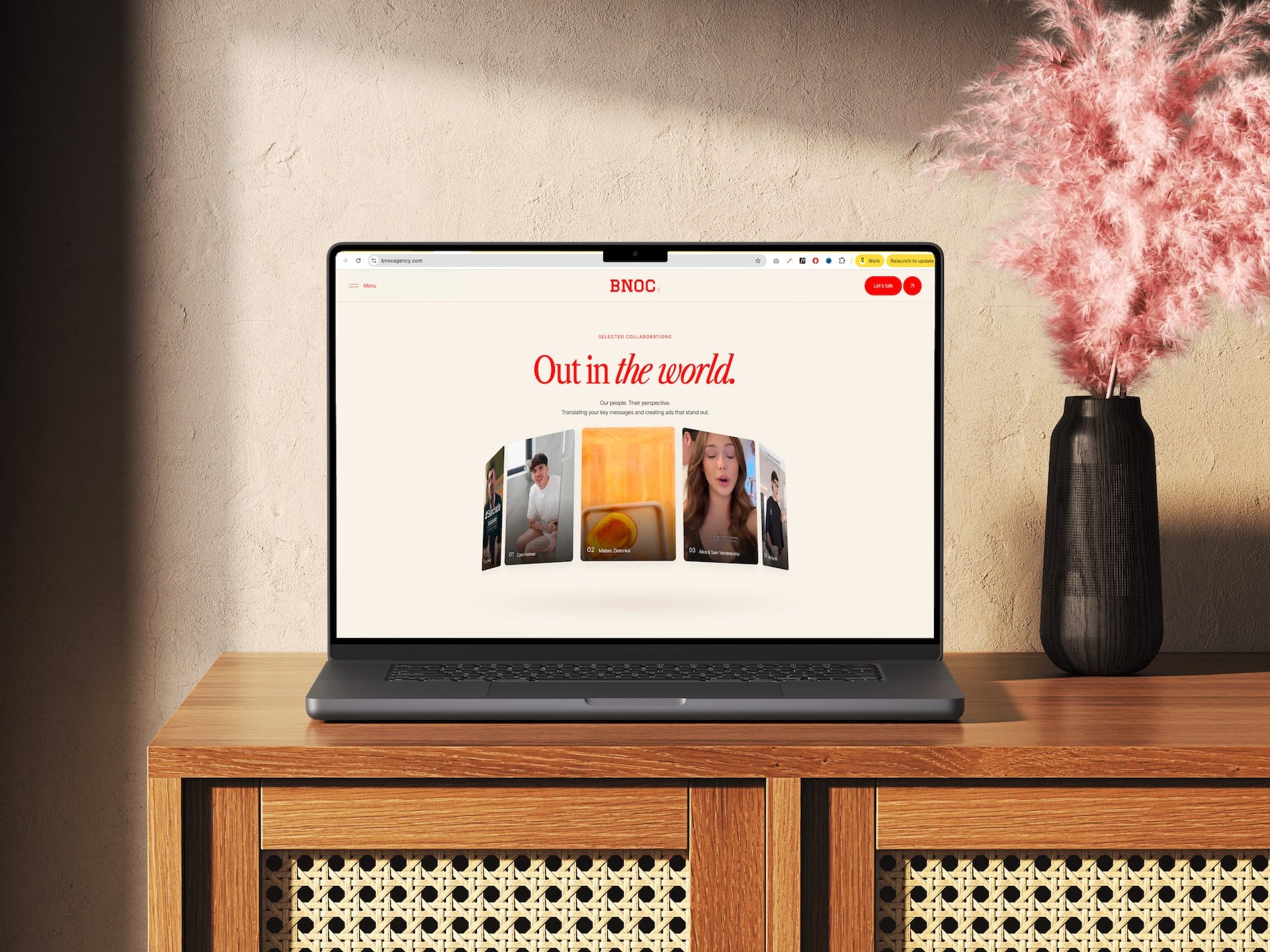
We developed BNOC's custom CRM on Meibo, our CRM platform: people, companies and talent relationships through to enquiries, deal pipelines, campaigns, tasks and delivery.
Our roleWebsite design and build, and custom CRM
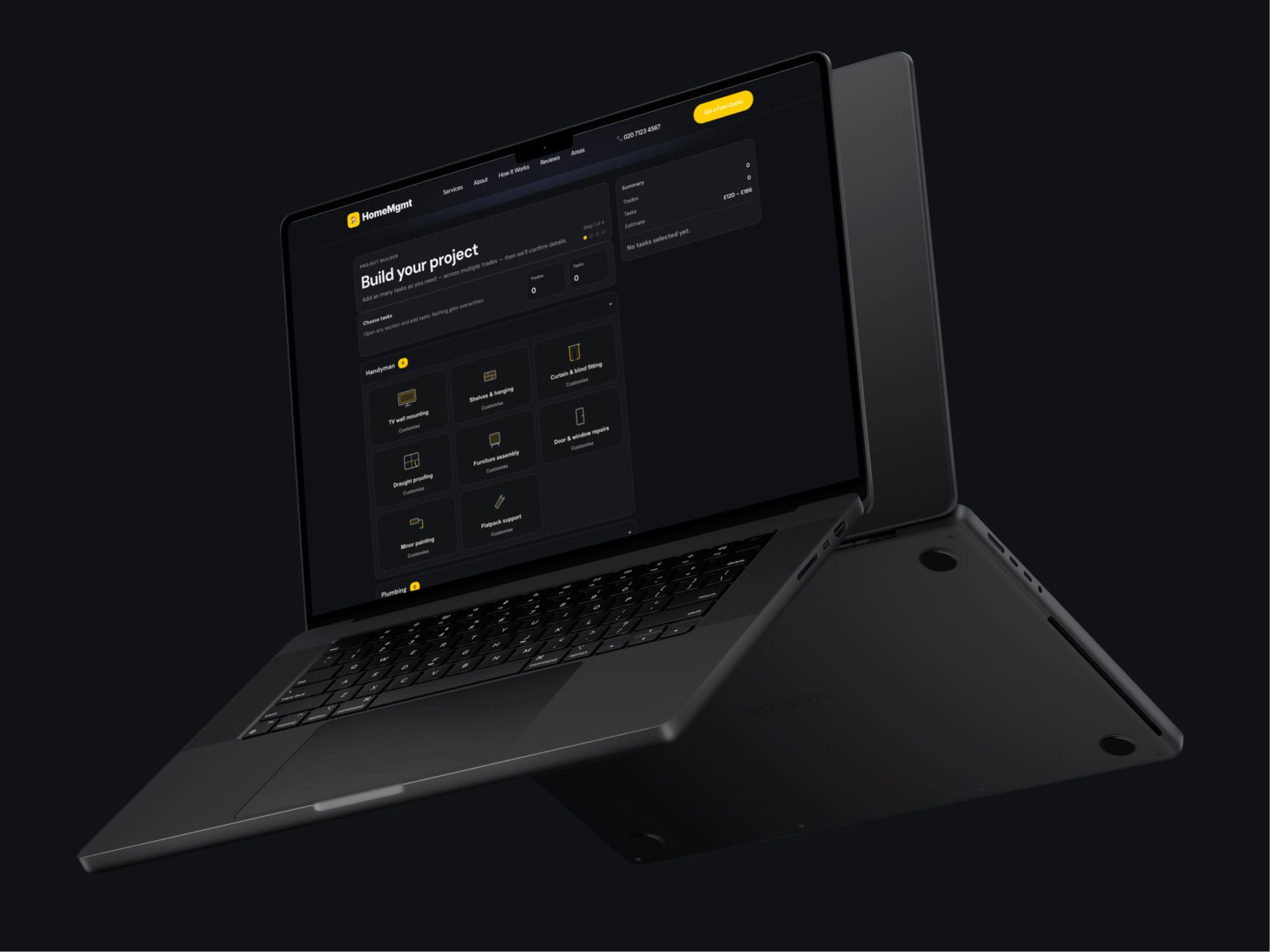
Every job moves through explicit states from submitted to paid, and each change triggers the right notification. It removed the daily reconciliation between the office and what was happening on site.
Our roleProduct design and build

A master dashboard provisions each brokerage with isolated data and its own branding, domain and settings, and updates ship to every tenant at once.
Our roleProduct direction, architecture, design and front-end delivery
Investment
From£10,000/ month
Technology strategy is delivered as part of the Wall & Fifth Product & Technology Partnership, so the systems we recommend are the systems we implement and keep improving. An initial three-month engagement maps the business and delivers the first priorities.
Larger builds or specialist requirements that exceed the monthly capacity are scoped and priced separately before work begins. Hosting, software subscriptions and other running costs are identified in the proposal.
Your proposal sets out.
A little more clarity
What to know about technology strategy and business technology consulting.
Start a conversationTechnology strategy consulting helps a business decide how technology should support its goals: which systems to keep, connect, replace or build, what that investment costs to own and run, and the order to implement it in.
Business technology consulting applies the same thinking to day-to-day operations: the CRM, client portals, internal tools, integrations and reporting a team relies on. The aim is to remove repeated work and make information easier to act on. That might mean configuring tools the business already pays for, connecting them, or building the right system.
A map of the current systems and how work moves between them; a recommendation for each part of the business (leave it, configure, connect, replace, improve or build); an implementation order with the cost to build and to run; and, at Wall & Fifth, the implementation itself.
When operations have outgrown the tools: work held together by spreadsheets and inboxes, systems that don't talk to each other, rising software costs, or a significant investment that needs a clear case before it's made.
Buy when a mature product does the job. Build when the workflow is how the business competes, or when nothing fits. Most businesses need a mix: off-the-shelf tools connected properly, with custom software where it earns its place.
Wall & Fifth delivers technology strategy as part of a Product & Technology Partnership, from £10,000 per month with an initial three-month engagement. Larger builds beyond the monthly capacity are scoped and priced separately, and running costs are identified in the proposal.
Yes. Wall & Fifth designs and builds the agreed systems, from integrations and internal tools to client portals and custom CRMs, or coordinates delivery with your existing developers. Responsibilities are agreed before work begins.
Data ownership, permissions, hosting and support are part of the assessment rather than an afterthought. You retain ownership of your business data, and our security pages set out how we approach secure development, data protection, hosting and maintenance.
Product & technology partnership

Make the next move
Tell us where the hours go, which tools you rely on and what's holding the business back. We'll tell you where we'd start and what a first engagement would involve.
Discuss a partnership